
Sound deadening & insulation
Comfort starts beneath the surface
A quality conversion begins before the furniture, flooring and visible finishes are installed. Correctly applied sound deadening and insulation reduce panel resonance, improve thermal comfort and help turn the harsh interior of a panel van into a quieter, more usable living space.
Why it matters
Treating the body properly
A standard panel van contains large areas of exposed steel that can resonate, transmit road noise and respond quickly to outside temperatures. Treating the body correctly makes a noticeable difference both when driving and when the van is being used as living accommodation.
Potteries Camper Co uses a three-stage Dodo Mat system based on Dodo DEADN Pro, Dodo Thermo Liner Pro and Dodo Fleece EVO. Each material has a different job, and the value comes from using the right product in the right area rather than simply covering every surface with the same layer.
What good insulation gives you
- Reduced panel vibration and drumming
- Lower levels of road and tyre noise
- Improved warmth in colder weather
- Reduced heat transfer during summer
- Better thermal efficiency
- Better management of condensation risk
- A quieter and more comfortable interior
The three-stage system
Right product, right area
Dodo DEADN Pro
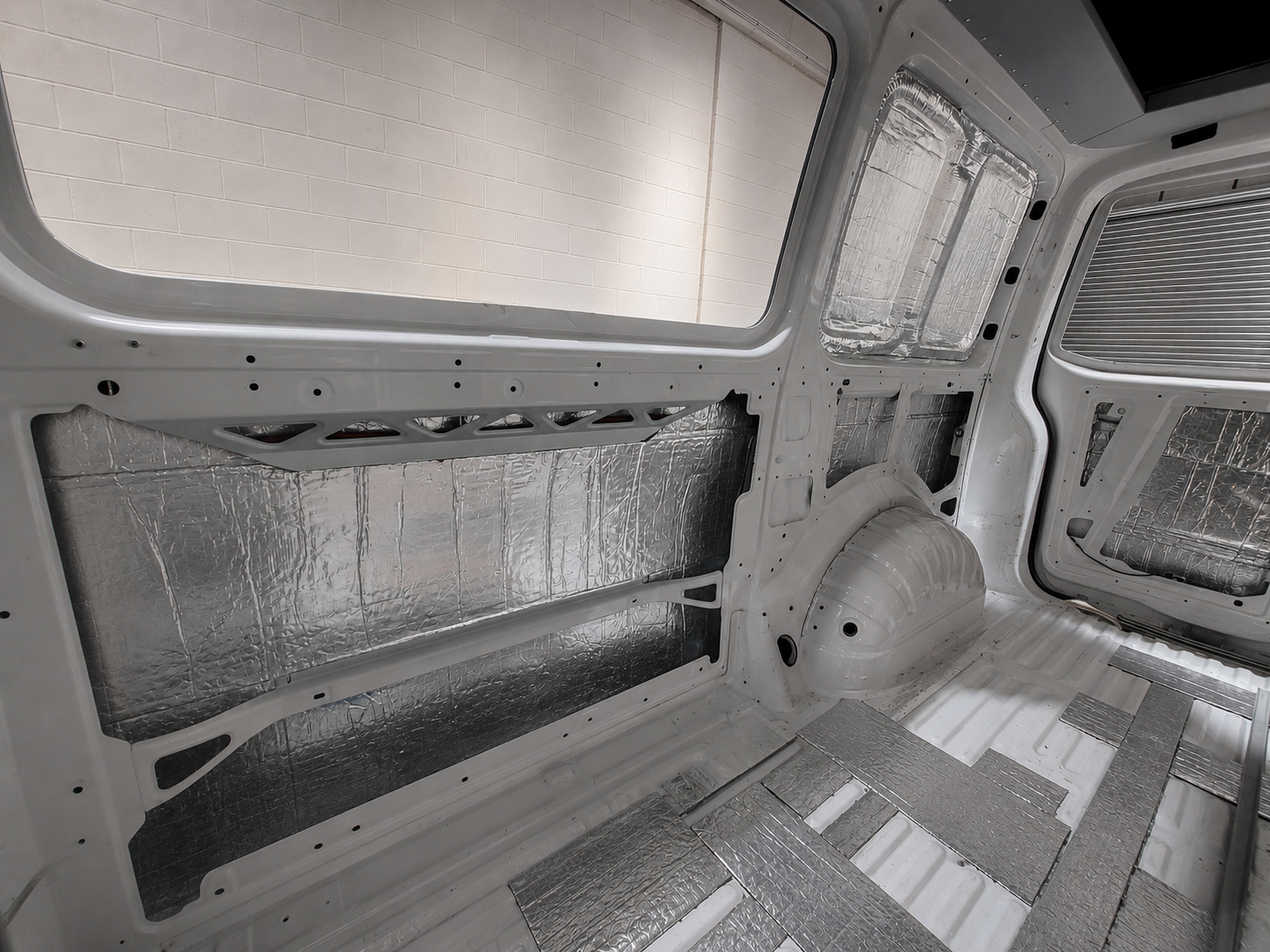
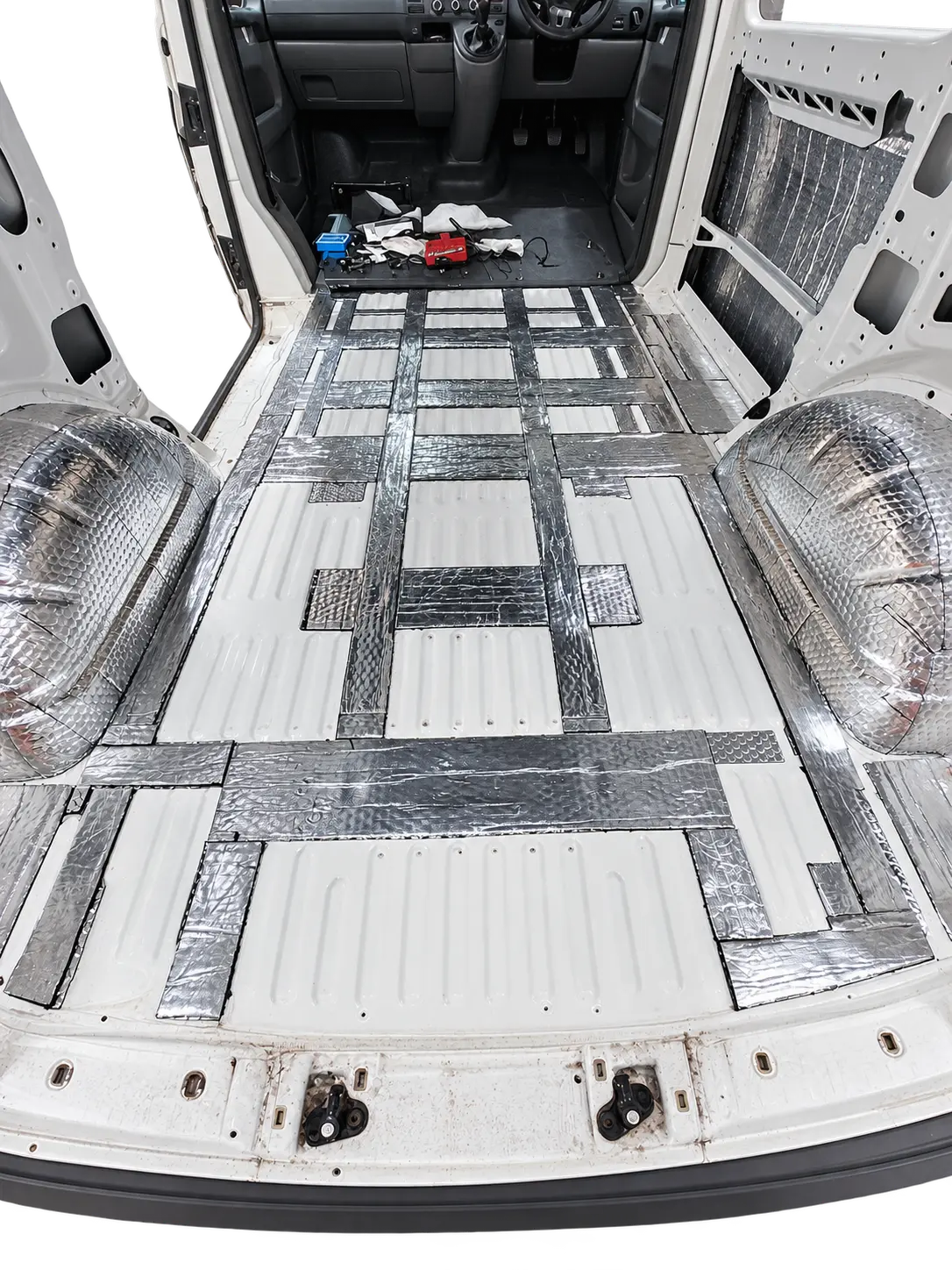
Dodo DEADN Pro is applied to suitable areas of the vehicle's steel bodywork to control resonance and vibration. It is positioned where it will be effective rather than added simply to maximise coverage. This first stage reduces the hollow, drumming character of an untreated panel van and provides a solid, quiet base for the rest of the conversion.
Stage 1: Dodo DEADN Pro butyl sheet, applied to suitable panel areas to control resonance and vibration.
Dodo Thermo Liner Pro
Dodo Thermo Liner Pro is fitted over prepared panel areas as the main closed-cell thermal layer. It helps reduce heat transfer through the vehicle body while adding further acoustic benefit and providing a moisture-resistant layer against the metal surface. This layer supports year-round comfort in colder and warmer conditions alike.
Stage 2: Dodo Thermo Liner Pro, fitted over prepared panels as the main closed-cell thermal layer.
Dodo Fleece EVO
Dodo Fleece EVO is fitted into suitable deeper cavities and voids to add further thermal insulation and absorb airborne sound. It is installed so that it fills the available space without unnecessary compression. Used with the previous layers, the fleece helps reduce cold spots and improves overall acoustic and thermal comfort.
Stage 3: Dodo Fleece EVO, packed into deeper cavities and voids for thermal and acoustic insulation.
Preparation and coverage
Material choice is only part of the job
Surfaces are prepared before installation, coverage is planned around the construction of the vehicle, and different products are used according to the shape, depth and function of each area.
- Roof panels
- Side panels and rear quarters
- Sliding and rear doors
- Wheel-arch areas
- Accessible structural cavities and voids
Floor construction, carpet lining and interior trim are addressed separately as part of the wider conversion specification.
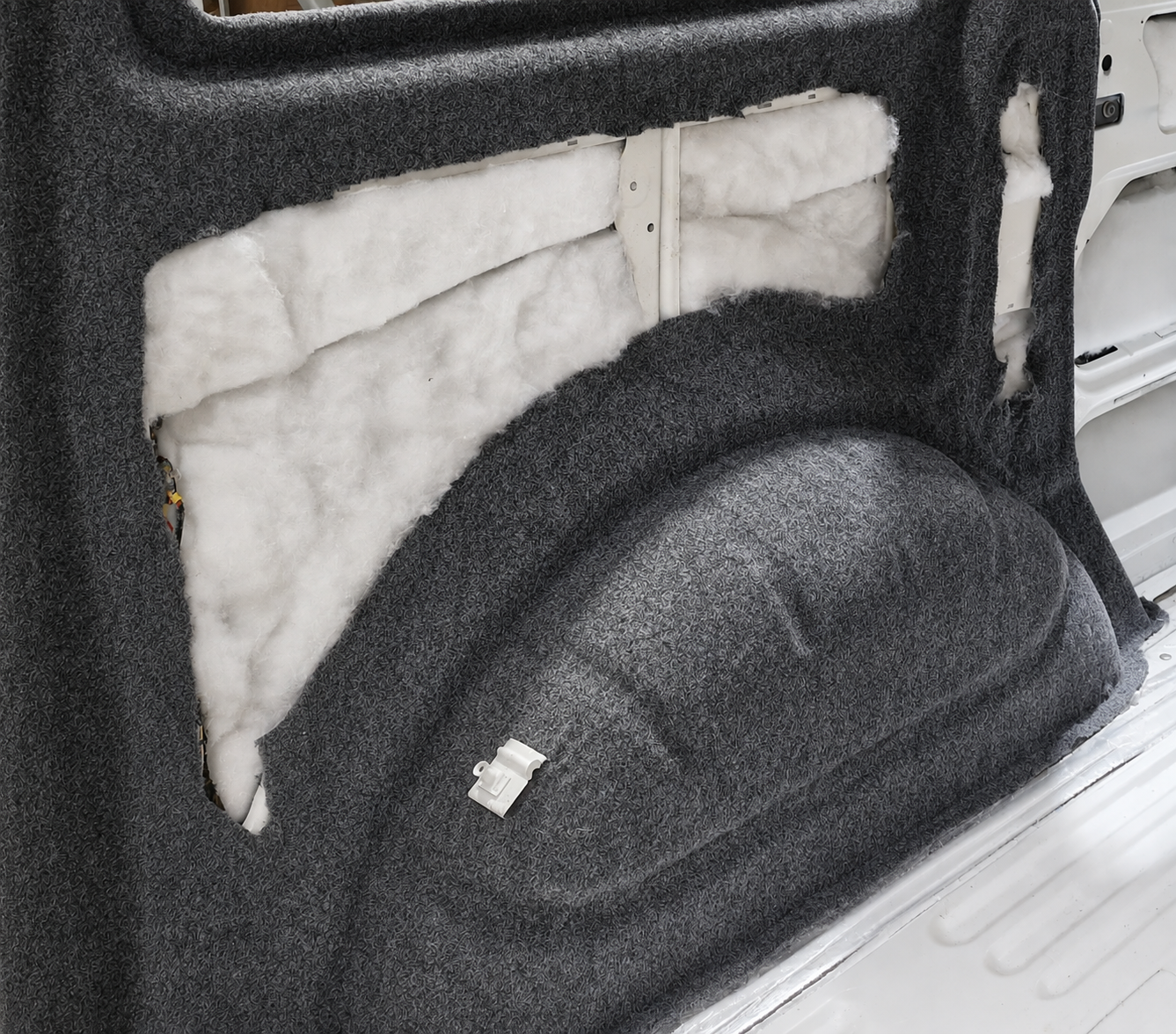
Fire retardant 4-way stretch carpet/faux suede
Potteries Camper Co uses fire retardant 4-way stretch automotive carpet for suitable lining areas. Its flexibility allows it to follow the curves, recesses and shaped surfaces inside the van while providing a durable, neat finish.
It is used on suitable panels, wheel arches, door areas and trim sections as part of the finished interior.
Comfort in every season
Good insulation cannot make a campervan behave like a house, but it can make a substantial difference to comfort. The van becomes quieter on the road, easier to heat and more pleasant to use across a wider range of weather conditions.
The work you do not see
Still matters
Once the conversion is complete, most of the insulation is hidden. Its value is felt through quieter journeys, improved temperature control and a quieter, more comfortable interior. Potteries Camper Co therefore treats this work as a fundamental part of the build, not something to be rushed because the customer will not see it.
Guide pricing
What it typically costs
Guide prices from
- Acoustic and thermal liningfrom £1,495
Prices shown are a guide. Every van and specification is slightly different, so we'll confirm the price before work starts.
Talk to us about insulation
Sound deadening and insulation can be specified as part of a complete conversion or as an interior upgrade. Book a no-obligation consultation.